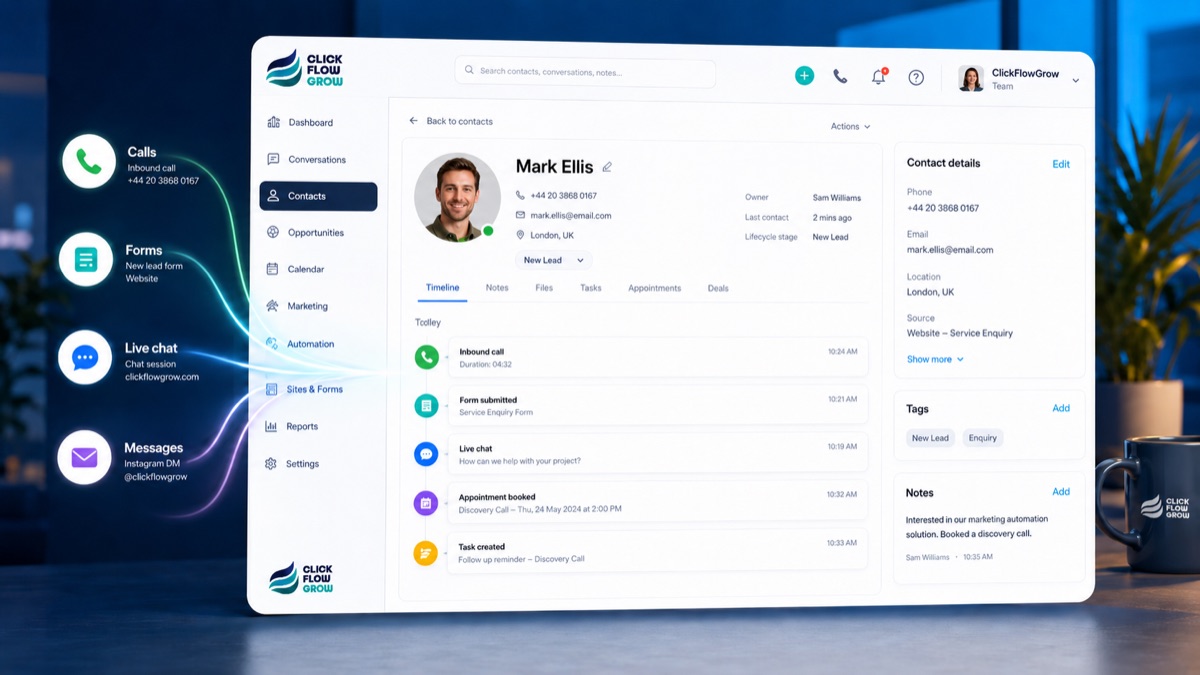
A connected enquiry journey moves useful information from the website into a clear customer record, routes it to the right person and supports an appropriate next action. The CRM preserves context; follow-up turns that context into a response rather than another disconnected task.
Many enquiry problems appear to be website problems. A form feels slow, a reply arrives late or the customer has to repeat themselves. Often the real break occurs after the form: the information is sitting in an inbox without an owner, history or agreed next step.
1. The website captures intent
The form, chat or booking page should collect enough information to understand why the person is getting in touch. It should not ask for everything the business might ever want. A name, reliable contact route and a little context are often more useful than a long qualification exercise.
2. The CRM preserves the context
A CRM gives the enquiry somewhere deliberate to live. It can bring together forms, calls, chats, notes, appointments and follow-up so the team can see what has already happened. This is more useful than treating the CRM as a digital address book.
3. Routing gives the enquiry an owner
The next step should be explicit. Depending on the enquiry, that may mean notifying a named person, creating a task, offering a booking route or moving an opportunity to a suitable stage. Automation can support the handoff, but someone still needs to be accountable for the outcome.
- The visitor receives clear confirmation that their enquiry arrived.
- The full context is saved against the correct customer record.
- A named person or team owns the next action.
- Urgent or sensitive enquiries can bypass routine automation.
- The reply uses the channel and consent the visitor actually provided.
- The business can see whether the promised follow-up happened.
4. Follow-up should match the request
Someone asking a quick question should not automatically receive a complicated sales sequence. Someone asking for a demonstration should not be left with a generic acknowledgement. Useful follow-up is proportionate: it recognises the request and makes the next decision easier.
5. Learning closes the loop
Connected systems make patterns visible. Repeated questions can improve website copy. Missed handovers can reveal a workflow gap. Enquiries that regularly stall may show that the next step is unclear. The aim is not to watch every click; it is to make the service more reliable.
A simple way to review your journey
- Submit an enquiry as a new visitor.
- Check exactly where the information arrives.
- Confirm who is told and what action they are expected to take.
- Read the acknowledgement from the customer’s point of view.
- Check whether the whole exchange remains visible in one record.
If the journey depends on memory, forwarding emails or copying data between tools, connection is likely to make a bigger difference than adding another form.