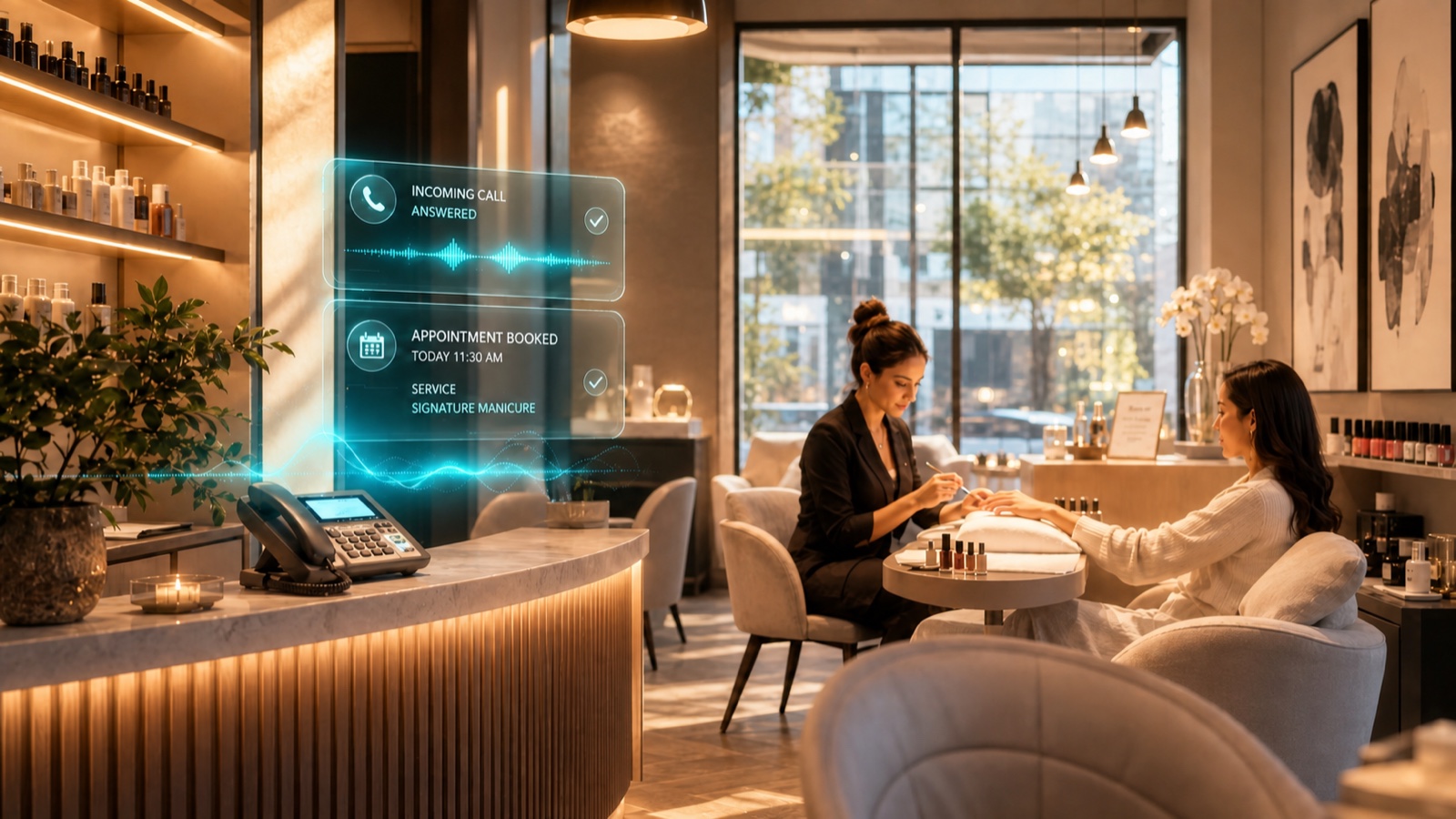
An AI receptionist can handle the repeatable first part of a call: answer promptly, use approved business information, ask useful questions, capture details and guide the caller towards a defined next step. It should hand over when a request needs judgement, empathy, negotiation or information it cannot verify.
The value is not simply that a voice answers. The useful part is what happens next: whether the caller receives a clear response, whether the right details reach the business and whether a person can step in without losing the context.
What it can handle well
An AI receptionist is strongest where the opening conversation follows a recognisable pattern. That can include greeting the caller, explaining opening hours, collecting the reason for the call, answering approved common questions and offering an agreed booking or follow-up route.
- Answer when the team is busy, closed or on the job.
- Ask consistent questions and capture names, contact details and enquiry context.
- Use approved information about services, locations and common policies.
- Offer a suitable booking route when a connected calendar and rules are in place.
- Save a summary or transcript with the customer record where the chosen system supports it.
What it should not decide alone
AI should not be treated as an unrestricted substitute for human judgement. Sensitive complaints, unusual technical advice, emergencies, complex pricing, contractual commitments and emotionally difficult conversations need clear boundaries.
A good setup tells the assistant what it may say, what it must never invent and exactly when to hand the conversation to a person. If the information is uncertain, the correct response is to say so and offer the next safe route.
What changes when it is connected
A standalone voice can answer, but a connected system can make the exchange useful. The call can create or update a contact, add an enquiry note, suggest a booking, trigger an approved acknowledgement or create a task for a team member. The exact actions depend on the agreed CRM and automation setup.
That is why ClickFlowGrow treats the receptionist as part of a customer journey rather than a novelty voice. The call, record, next step and human handover should support one another.
Questions to settle before launch
- Which questions can the assistant answer from approved information?
- Which requests must always reach a person?
- What happens during and outside working hours?
- What details should be captured, and what consent or notice is required?
- Who owns the follow-up when a call cannot be resolved?
The practical test
Listen to it as a customer would. Try a normal enquiry, an unclear question, a complaint and a request it should refuse to answer. Check the wording, pace, capture, handover and CRM record—not just the quality of the voice.
The aim is a useful first response with a reliable route to a human, not an AI that pretends to know everything.